Loading...
Serving Hagerstown, MD and surrounding areas. (240) 866-8862
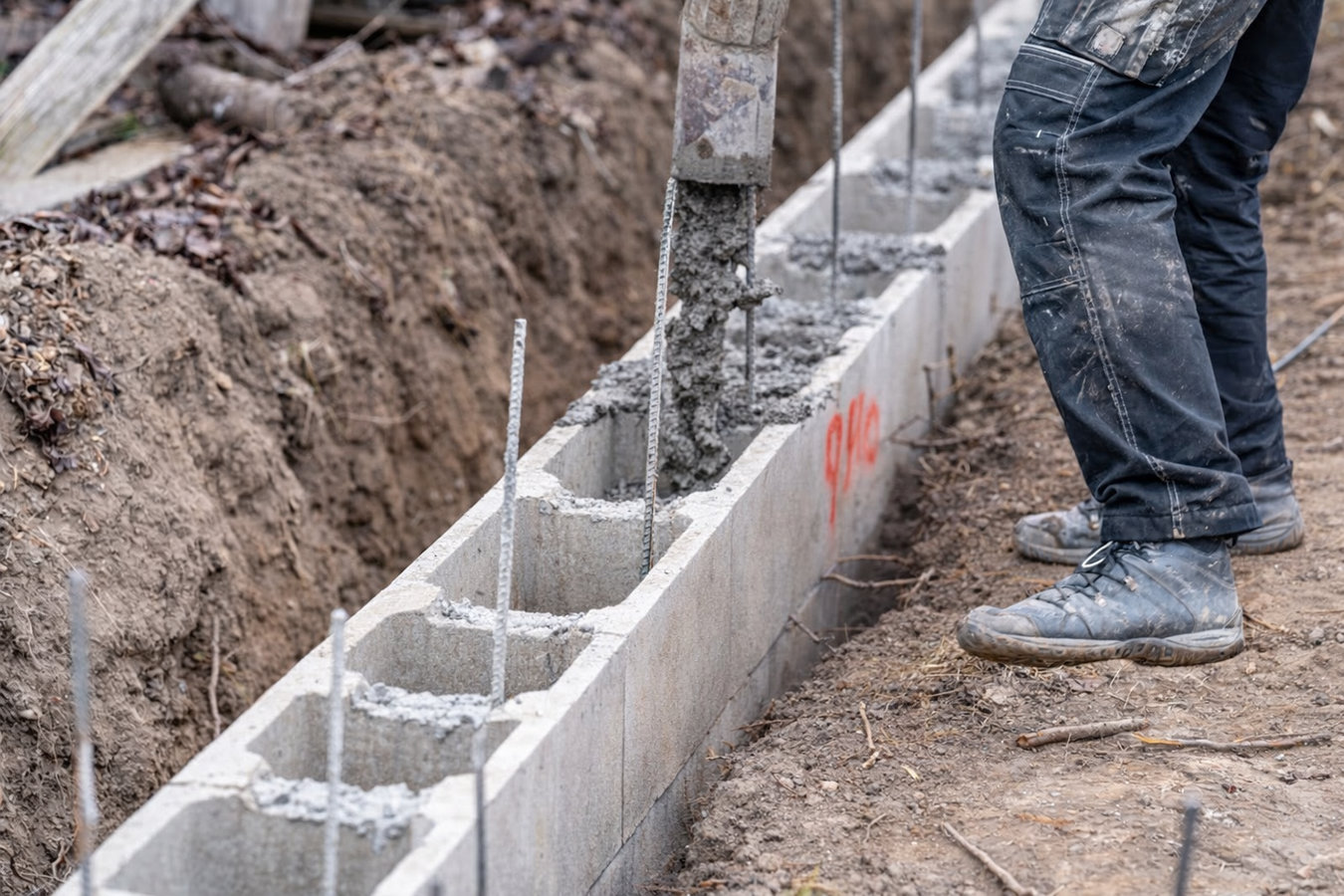
A sunken driveway, settling patio, or uneven garage floor is a trip hazard and a water problem waiting to get worse. We lift concrete slabs back to level - same day, no demolition, no hauling.
Foundation raising in Hagerstown is the process of lifting a sunken concrete slab back to its original level by pumping material beneath it through small drilled holes - most residential jobs on a driveway section, patio, or garage floor take two to four hours and you can walk on the surface within the same day.
If your concrete has tilted, developed a noticeable dip, or pulled away from your house wall, the slab itself is usually fine - it is the soil beneath it that has shifted, washed away, or compressed over time. Foundation raising fills that void and restores the grade without ripping out and replacing the entire slab. When a sunken slab has also cracked along a structural line, we assess whether lifting will hold or whether concrete cutting to remove the damaged section is the better first step.
We also evaluate whether the project needs work from the ground up - in cases where the underlying base is severely compromised, coordinating with our slab foundation building team may be the right long-term solution. But for most settling slabs in good condition, raising is faster, less expensive, and less disruptive than any alternative.
Stand at one end of your driveway, patio, or sidewalk and look down its length. If one section sits lower than the one next to it - even by an inch - the slab has settled. In Hagerstown's older neighborhoods, this kind of uneven settling is common after decades of freeze-thaw cycles working on the soil beneath the concrete. It will not level itself on its own, and the height difference tends to grow each year.
Walk the perimeter of your home and check where any concrete slab - porch, stoop, garage floor, patio - meets the house wall. If you see a gap that has opened or appears to be widening, the slab is pulling away as it sinks. This gap also channels rainwater directly toward your foundation wall, which can create basement moisture problems on top of the concrete issue.
Concrete slabs are poured with a slight slope so water runs off. When a slab sinks, that slope can reverse and water starts collecting in low spots instead of draining. In Hagerstown, where spring rain and summer storms are common, pooling water on a patio or driveway is a clear signal the surface has shifted. Standing water will keep eroding the soil underneath, accelerating the problem.
If a section of your concrete floor or patio feels slightly springy or makes a hollow sound when you tap it, there is likely a void beneath it. That void formed because soil washed or compressed away - and the slab is now spanning empty space. This is exactly the condition foundation raising is designed to fix before the slab cracks or collapses under vehicle or foot traffic.
We use two methods depending on your slab, your soil, and your timeline. Traditional mudjacking pumps a cement-and-soil slurry beneath the slab through small holes, filling the void and pushing the concrete back to level. It has been used for decades, is typically the more affordable option, and is well-suited to larger areas like driveways and garage floors. Polyurethane foam injection uses an expanding foam that hardens quickly, leaves smaller holes, and is often the better choice for areas where you need the surface back in use the same day. Both methods work by addressing the void under the slab - the right choice depends on your specific situation, and we will walk you through the options before any work begins.
We also handle drainage assessment as part of every job. If water erosion is the reason the slab sank in the first place, lifting it without addressing the drainage just postpones the same problem. For slabs that are badly cracked or broken, we can pair raising work with our concrete cutting service to remove compromised sections first, then work on the base before any new concrete is placed. When the project scope calls for a full new slab, our slab foundation building team handles that from the ground up.
Best for larger settling slabs like driveways, garage floors, and patios where cost-effectiveness matters and same-hour return to use is not required.
Best for situations where minimal hole size, faster curing, and same-day use of the surface are priorities - often preferred for pool decks and interior slabs.
Best for slabs that have not visibly sunk yet but feel hollow underfoot - filling the void now prevents a collapse under load and avoids a larger repair later.
Best for homeowners whose slabs have settled more than once, addressing the water and soil erosion that caused the problem rather than just lifting the symptom.
Hagerstown sits in the Cumberland Valley, where winter temperatures regularly drop below freezing and the ground expands and contracts with every seasonal cycle. That repeated movement is one of the most predictable causes of concrete settling in this region - and it affects driveways, patios, garage floors, and walkways across every neighborhood in the city. Much of Washington County also sits on clay-heavy soils that absorb water, swell, and then shrink as they dry, a constant pulling motion on the underside of any slab sitting on top. The USDA Web Soil Survey documents the clay-rich character of Washington County soils in detail. A significant portion of Hagerstown's housing stock was built between the 1920s and 1960s - concrete poured over minimally prepared subgrades that have had decades of settlement, root growth, and water movement working on them.
Spring rain season brings another factor: when water erodes soil from beneath a slab, the problem accelerates fast. Homeowners who notice settling in the fall often find the gap much worse by the following spring. We work across Hagerstown and the surrounding area, including customers in Martinsburg, WV and Frederick, MD, where the same clay-soil and freeze-thaw conditions affect concrete in similar ways. The U.S. Consumer Product Safety Commission has identified uneven walking surfaces as a leading cause of residential fall injuries - which is one more reason settling concrete is worth addressing before another winter season.
When you reach out, we ask a few basic questions - where the slab is, how much it has sunk, and whether you have noticed any cracking. This helps us come prepared with the right equipment. Most estimates are free and scheduled within one business day.
We walk the area with you, measure the height difference, and probe the edges to understand what is happening underneath. We will tell you plainly whether raising is the right fix or whether the slab is too deteriorated to hold a lift - no pressure either way.
The crew drills small holes through the slab at measured intervals, injects material beneath it, and monitors the lift carefully to avoid over-raising. A typical driveway section or patio takes two to four hours. You can stay home during the job - there is no heavy demolition.
Drilled holes are filled with concrete patch material and smoothed flush. The crew cleans up and removes all equipment. For mudjacking, you can walk on the surface within an hour and drive on it within 24 hours. We also talk through drainage so you understand how to protect the result long-term.
Free on-site estimate. No obligation. We will walk the area with you and give you a straight answer before any work begins.
(240) 866-8862We hold a valid Maryland Home Improvement Commission license, which Maryland law requires for any contractor doing home improvement work including foundation and concrete services. That license means we have passed background checks, carry required insurance, and are accountable to a state board. You can verify any MHIC license in about 30 seconds on the Commission's site.
Not every sunken slab is a good candidate for raising - and we will tell you that plainly if it is true. If the slab is too cracked or deteriorated, we will explain why replacement is the better call rather than taking your money on a lift that will not hold. You deserve a straight answer, not a sales pitch.
Our crews have worked on concrete across Hagerstown and Washington County, including homes in the North End, Pangborn, and older neighborhoods near downtown - areas where clay-heavy soil and decades-old subgrades are the norm. That local familiarity shapes how we assess every slab before deciding on a method.
We talk through drainage as a standard part of every foundation raising job. If water erosion caused the original settling, ignoring it means the slab will likely settle again. We will point out what you can do to redirect water away from the slab, protecting both the investment and your foundation wall.
These are not just talking points - they reflect how we actually operate on every job. We show up prepared, explain what we find, do the work correctly, and leave the area clean. That is what we would want from a contractor working on our own homes.
When a slab is too cracked to lift cleanly, we cut out the damaged section first so the remaining concrete has a stable edge before any new work begins.
Learn MoreFor situations where raising will not hold and a new concrete slab is the right answer, we handle the full pour from base prep to finished surface.
Learn MoreEvery spring, Hagerstown homeowners who noticed settling over the winter all call at once. Get on the schedule early and have the work done before another freeze-thaw season makes the problem worse.